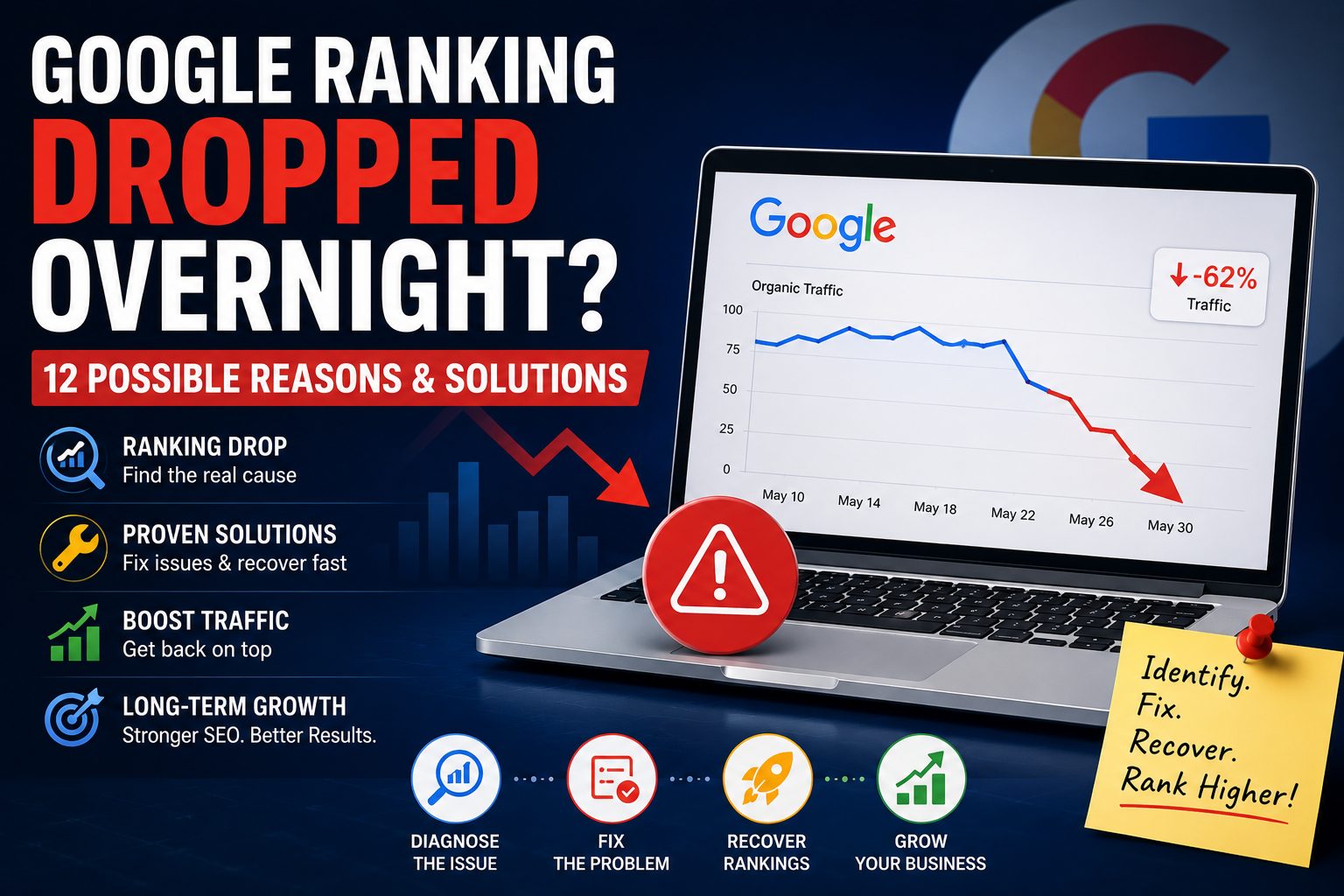
Few things are more alarming for website owners than waking up to discover a sudden drop in Google rankings. One day your pages are appearing on the first page of search results, and the next day your traffic, visibility, and leads seem to disappear.
While a sudden ranking drop can be frustrating, it doesn’t always mean your website has been penalized. Search rankings can fluctuate for many reasons, ranging from Google algorithm updates and technical SEO issues to increased competition and content quality concerns.
The key is identifying the cause quickly and taking the right corrective actions.
At REU Ads, we help businesses diagnose SEO performance issues and recover lost rankings through data-driven SEO strategies. In this guide, we’ll explore 12 common reasons why Google rankings drop overnight and the solutions that can help restore your search visibility.
Is It Really a Ranking Drop?
Before assuming your rankings have fallen, verify the issue using tools such as:
- Google Search Console
- Google Analytics
- Google Keyword Rankings Tools
- SEO Audit Tools
Sometimes traffic fluctuations are caused by seasonal trends, changes in search behavior, or reporting delays rather than actual ranking losses.
- Google Algorithm Update
One of the most common reasons for sudden ranking changes is a Google algorithm update.
Google regularly updates its search algorithms to improve search quality and user experience. These updates can impact websites positively or negatively.
How to Fix It
- Review Google’s recent update announcements
- Analyze affected pages
- Improve content quality
- Focus on E-E-A-T principles
- Update outdated content
Websites that provide valuable, user-focused content typically recover faster.
- Technical SEO Issues
Technical problems can cause search engines to struggle with crawling and indexing your website.
Common issues include:
- Broken pages
- Redirect errors
- Crawl errors
- Server problems
- Indexing issues
How to Fix It
Perform a technical SEO audit and resolve:
- Crawl errors
- Broken links
- Duplicate pages
- XML sitemap issues
- Robots.txt errors
- Website Redesign or Migration Problems
Website redesigns often create SEO challenges when not handled properly.
Ranking drops frequently occur after:
- Domain changes
- URL structure changes
- Platform migrations
- Website redesigns
How to Fix It
- Verify redirects are working correctly
- Check internal links
- Submit updated sitemaps
- Monitor indexing status
Proper migration planning helps preserve rankings.
- Lost Backlinks
Backlinks remain an important ranking factor.
If high-quality websites remove links pointing to your pages, rankings may decline.
How to Fix It
- Monitor backlink profiles regularly
- Identify lost links
- Reach out to website owners when appropriate
- Build new authoritative backlinks
A healthy backlink profile supports long-term ranking stability.
- Manual Penalty from Google
Although less common, Google may apply manual actions against websites that violate search guidelines.
Common causes include:
- Unnatural backlinks
- Spam content
- Cloaking
- Keyword stuffing
How to Fix It
Check Google Search Console for manual action notifications.
If a penalty exists:
- Correct the issue
- Remove violations
- Submit a reconsideration request
- Increased Competition
Sometimes your rankings drop because competitors have improved their SEO efforts.
They may have:
- Published better content
- Earned stronger backlinks
- Improved user experience
- Enhanced site performance
How to Fix It
Conduct competitor analysis and compare:
- Content quality
- Keyword targeting
- Backlink profiles
- Technical SEO performance
Look for opportunities to outperform competitors.
- Content Quality Issues
Google prioritizes helpful, relevant, and trustworthy content.
Pages may lose rankings if content becomes:
- Outdated
- Thin
- Inaccurate
- Less useful than competing pages
How to Fix It
Update content regularly by:
- Adding fresh information
- Improving readability
- Including updated statistics
- Expanding valuable sections
For businesses looking to improve content quality and engagement, check out our guide on Content Writing Tips and Techniques.
- Keyword Cannibalization
Keyword cannibalization occurs when multiple pages target the same search term.
This can confuse search engines and weaken ranking signals.
How to Fix It
- Consolidate overlapping content
- Optimize each page for unique keywords
- Improve internal linking structure
A clear content strategy helps avoid keyword conflicts.
- Core Web Vitals and User Experience Problems
Google considers user experience signals when ranking websites.
Poor performance in areas such as:
- Loading speed
- Mobile usability
- Visual stability
can negatively affect rankings.
How to Fix It
Improve:
- Page speed
- Mobile responsiveness
- Website navigation
- User engagement
A better user experience supports stronger SEO performance.
- Indexing Problems
If Google cannot properly index your pages, rankings may disappear quickly.
Common indexing issues include:
- Noindex tags
- Canonical errors
- Sitemap issues
- Crawl restrictions
How to Fix It
Use Google Search Console to verify:
- Indexed pages
- Coverage reports
- Crawl status
- Sitemap submissions
Resolving indexing issues can often restore rankings.
- Declining Click-Through Rates (CTR)
Even if rankings remain stable, lower click-through rates can affect performance over time.
Poor CTR often results from:
- Weak meta titles
- Unattractive descriptions
- Increased competition in search results
How to Fix It
Optimize:
- Title tags
- Meta descriptions
- Structured data
- Rich snippets
More attractive search listings can improve engagement.
- Search Intent No Longer Matches
Search intent evolves over time.
A page that ranked well previously may lose visibility if it no longer matches what users expect.
For example:
- Informational content may replace commercial content
- Video results may dominate certain searches
- New content formats may become preferred
How to Fix It
Review the current search results for your target keyword.
Analyze:
- Content formats
- Search intent
- Competitor pages
Then update your content accordingly.
How to Recover Rankings Faster
Recovering rankings often requires a combination of improvements rather than a single fix.
Focus on:
- Technical SEO audits
- Content optimization
- User experience improvements
- Backlink growth
- Search intent alignment
Prioritize the issues that have the biggest impact on your website.
SEO Recovery Checklist
If your rankings dropped overnight:
- Check Google Search Console
- Review recent algorithm updates
- Audit technical SEO issues
- Verify indexing status
- Analyze competitor performance
- Update outdated content
- Monitor backlinks
- Improve page experience
- Optimize click-through rates
- Align content with search intent
Following a structured recovery process helps identify the root cause more quickly.
Protect Your Rankings with Ongoing SEO Monitoring
SEO is not a one-time activity. Search algorithms, competitors, and user behavior constantly evolve.
Businesses that regularly monitor their websites, update content, and optimize performance are better positioned to maintain rankings and recover quickly when fluctuations occur.
You can also learn how quality content influences visibility beyond traditional search results in our article on the Role of Content in Google Discover Rankings.
Turn Ranking Drops Into SEO Opportunities
A sudden ranking drop can feel overwhelming, but it is often an opportunity to improve your website and strengthen your SEO strategy.
Whether the issue is technical, content-related, competitive, or algorithm-driven, identifying the root cause is the first step toward recovery.
At REU Ads, we help businesses diagnose ranking issues, improve search visibility, and build long-term SEO success. If your Google rankings have dropped and you’re unsure why, our team can help uncover the problem and create a recovery plan that delivers measurable results.
FAQs
Why did my Google ranking suddenly drop?
Ranking drops can occur due to algorithm updates, technical issues, lost backlinks, content quality problems, increased competition, or indexing errors.
How long does it take to recover lost rankings?
Recovery time varies depending on the cause. Some issues can be fixed within days, while algorithm-related recoveries may take weeks or months.
Can a Google algorithm update affect my rankings overnight?
Yes. Core updates and other algorithm changes can cause significant ranking fluctuations across many websites.
How do I check if Google penalized my website?
Review Google Search Console for manual action notifications and investigate any reported issues.
Does updating content help recover rankings?
Yes. Refreshing outdated content and improving relevance often helps restore and improve rankings over time.